

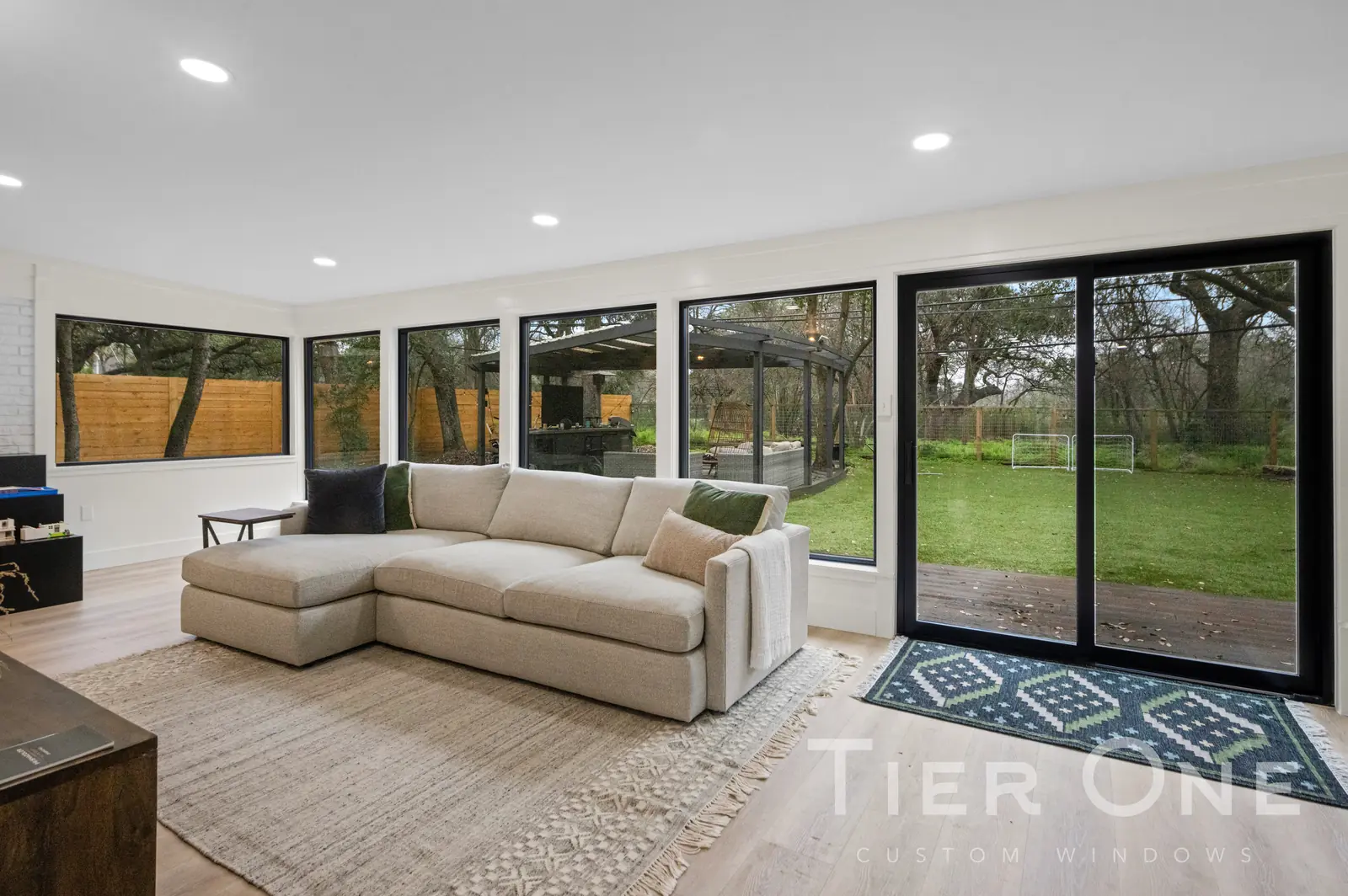
A window-to-door conversion changes a load-bearing wall, which makes it a structural project rather than a window replacement, and that single fact explains why most window companies will not quote one. Converting an opening means a new header, new framing, and then drywall, paint and exterior finish work to close everything the opening disturbed.
The reverse job, converting a door back into a window or a solid wall, runs the same way for the same reasons.
Why would you convert a window into a door?
The usual reasons are access and flow. A kitchen window that becomes a door onto a new patio, a primary bedroom that gains direct access to a pool deck, or a dining room that opens to a screened porch all make a house work differently without adding a square foot to it.
The reverse happens for privacy and furniture. A door that opens onto nothing useful, or a sliding door on a wall that would be more valuable as wall, becomes a window or a solid infill.
Conversions also come up when an addition changes what a wall is for. A door that used to go outside now goes into a new room, and it should probably not be an exterior door any more.
Is a window-to-door conversion a structural change?
Yes. A door opening is taller and usually wider than the window it replaces, and the wall above the opening has to be carried by a header sized for the new span and the load above it. That is engineering, not carpentry preference.
A few things follow from that. The header sizing depends on whether the wall is bearing and what is above it, which is why the assessment has to happen on site rather than from photographs. On a two-story house, or under a roof load, the answer is frequently different from the same opening on a single-story wall.
Do you need a permit to convert a window to a door in Austin?
In almost every case, yes. The City of Austin requires a building permit to "erect, construct, enlarge, alter, repair, improve, or convert any building or structure" within the City's zoning jurisdiction, and enlarging an opening and altering its framing is squarely inside that language.
It is worth knowing where the exemption line sits for comparison. Austin's published list of work exempt from residential building permits includes "replacing doors of the same size and operation." That is the narrow case: same size, same operation, no framing change. A conversion is the opposite of that on both counts.
Jurisdiction matters too, since our service area runs well past the Austin city limits into Cedar Park, Georgetown, Leander, Round Rock and beyond, and each has its own process. Confirm which authority has jurisdiction before assuming the Austin answer applies.
What about safety glazing on the new door?
Glass in and around a door is a regulated location. Under the 2021 International Residential Code, glazing in a window becomes a hazardous location requiring safety glazing when the exposed pane exceeds 9 square feet, the bottom edge sits less than 18 inches above the floor, the top edge sits more than 36 inches above the floor, and a walking surface is within 36 inches horizontally.
A new patio door and its sidelites will generally meet those conditions, so safety glazing belongs in the specification from the start rather than arriving as a surprise. Compliance is also documented on the glass itself, since the code requires manufacturer designations on tempered glass.
Converting the other direction raises a different code question. If the opening being filled in served a bedroom, check the emergency escape and rescue opening requirement before reducing glass area in that room, because a bedroom needs a compliant escape opening and a conversion can eliminate it.
How many trades does a conversion actually involve?
Four, usually, and this is the part that determines whether the job goes smoothly. The opening needs framing, the window or door needs installing, the interior needs drywall and paint, and the exterior needs siding, brick, stone or stucco work to close the gap where the old opening was.
Most window companies do the middle step only. We carry the others, including reframing, drywall, paint, siding, brick, stone, stucco and cement block work, which is the reason conversions are something we quote rather than decline. When one crew owns the whole opening, there is nobody to point at when the brick line does not match or the drywall patch telegraphs.
That is not a small consideration on a conversion specifically, because a conversion always leaves a visible scar if the finish trades are an afterthought. The test of the job is whether you can tell afterwards that the wall used to be something else.
What should you expect the process to look like?
Expect an on-site assessment first, because header sizing and bearing conditions cannot be determined remotely. From there the sequence runs: structural approach confirmed, permit filed where required, product ordered to the new opening dimensions, demolition and reframing, installation, then interior and exterior finish work and inspection.
The product lead time is usually the longest single element, and it starts only once the opening is confirmed, because a conversion door is ordered to the new dimensions rather than off a shelf.
Get the wall assessed before you plan around it
If you are thinking about opening a wall onto a patio, pool deck or porch, the first question is what the wall is carrying, and that is a free on-site visit rather than a quote. We will tell you what the opening needs structurally before anyone talks about product.
Tier One Custom Windows is an Austin-based, family-owned specialist with 30-plus years of combined team experience. Call (512) 615-8629 or request an assessment. You can see conversion and remodel work in our portfolio, and our custom window and door installation page covers made-to-measure openings.